History
From missile base to art park
Dinosaur tracks, a witch story, a Cold War radar post, and decades of artists. How our hill, and our Centre, got here.
Before the artists
Every hill has a backstory, and ours starts early. Down the road, in rock that’s about 200 million years old, quarry workers in the late 1960s found the tracks of small dinosaurs. You can still see that ground today at the Walter Kidde Dinosaur Park next door.
The name came much later. As the Livingston story goes, a man named Peter Riker settled on the hill in the 1700s without anyone’s permission, along with his mother, and the neighbors whispered that she was a witch. Whether any of it happened, nobody knows. We like to think a hill with a witch in its past was always going to end up full of artists.
The hill goes to war, quietly
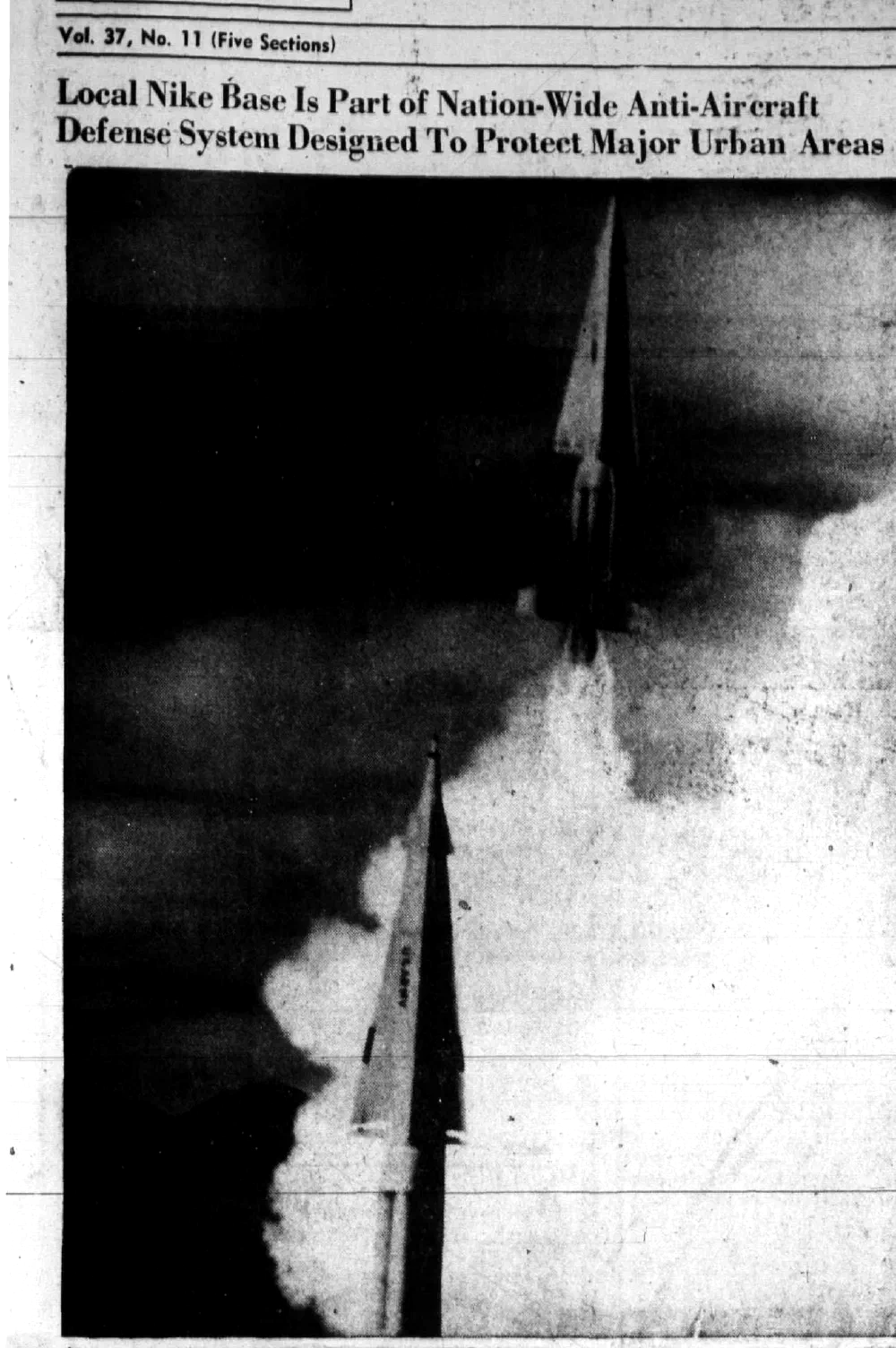
America was ringing its big cities with Nike anti-aircraft missiles, meant to bring down Soviet bombers before they could reach New York. A Nike battery came in two pieces: the missiles themselves, and somewhere high up with a clear view, a radar post to find the targets and steer the missiles.
Riker Hill sits higher than almost anything else in Essex County, so it got the radar. Its official name was Control Area, Nike Battery NY-80, and its launchers sat a few miles west in East Hanover. The Army began acquiring the land in 1954, and in early 1956 the base went live, staffed by 82 men of C Company, 483rd AAA Missile Battalion. The West Essex Tribune put it this way on its front page: “For the first time since the Revolutionary War, Livingston, New Jersey, is the site of an army post.”
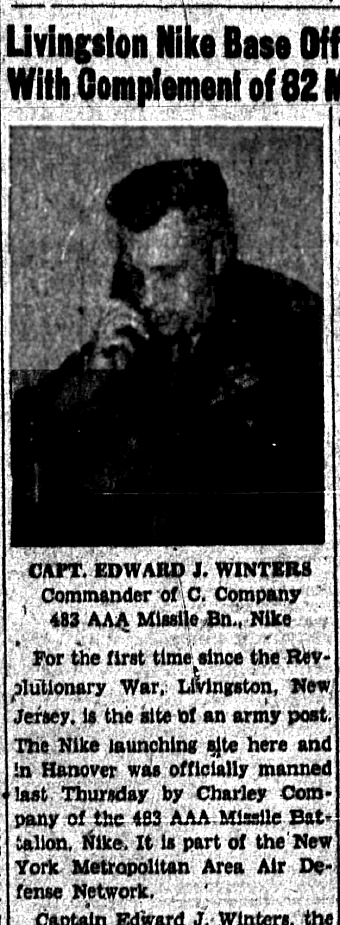
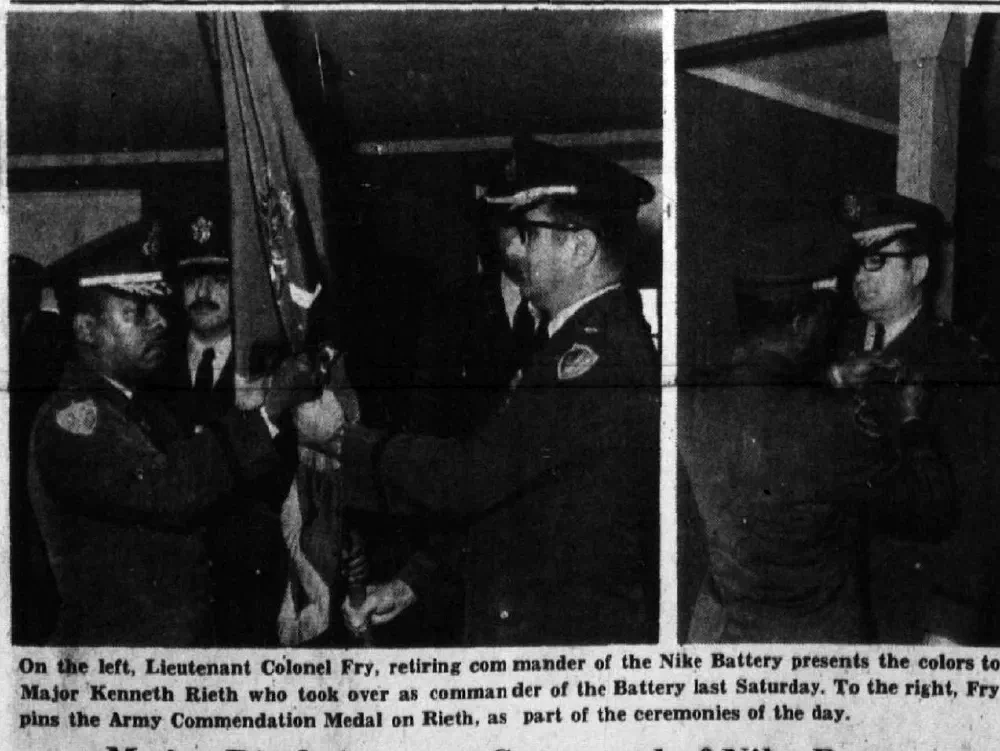
For almost twenty years the crews trained and watched the sky while Livingston grew up around the fence. Later the base was run by the New Jersey Army National Guard, and command changed hands with full ceremony.
The missiles were tested far away at desert ranges, and none was ever fired from Livingston. The battery’s job was to be ready, every day, just in case.
A one-dollar deal
The bombers never came, and by the 1970s the threat had moved to rockets that no Nike could stop. NY-80 shut down in 1974. Essex County bought the roughly 42 acres for a single dollar after competing with other agencies that also wanted the land. The county first tried a small geology museum to show off the local fossils, but the hilltop was too out of the way, and it closed.
Artists move in
What the county had left was a hilltop of plain block buildings and stripped-down radar towers, and a handful of local artists looked at it and saw studios. In the early 1980s the county’s cultural affairs office took the site on with no money attached. The artists would have to make it pay for itself through classes, sales, and their own labor.
It was rough going. Many of the buildings were empty shells, with no utilities and missing roofs and doors. The first group set up in Building #509 because it was the only one that could be heated, and they rebuilt the rest themselves, helped by donated materials from local businesses.
It worked. Sculptures began to appear outdoors, and by summer 1986 every building had artists in it and there was a summer concert series, popular enough that a stage was built the next year.
A park full of studios
Over the late ’80s and ’90s the hill added jazz evenings, Shakespeare outdoors, and the yearly open house that still brings visitors up the hill. The three tall stainless steel “Whale Tail” sculptures arrived in 1991, and new printmaking and ceramics studios opened that year. By the mid-’90s about 35 studios were turning out glass, pottery, photographs, jewelry, weaving, steel sculpture, paintings and furniture.
Our story: the Art Centre of New Jersey
We’re older than the park. The Art Centre of New Jersey began in East Orange, and its annual exhibition was already a fixture by the 1970s. The West Essex Tribune reported on its 26th annual show in 1977, which means the first one took place in the early 1950s.
For decades an Art Centre award meant something. Artists listed honors like the Henry Rankin Poore Award next to prizes from the Newark Museum, and our instructors taught life-drawing master classes that students followed for years. Drawing from the live model has been part of who we are for a long time, and it still is every week.
We’ve moved around. In the late 1970s we were at 16 Washington Street in East Orange, then at the art building of Upsala College through the 1980s and early ’90s, and from the mid-1990s at Riker Hill Art Park. Through every move, our members’ exhibitions have carried on.
Today
The park is owned by Essex County and kept going by the people who work in it. The Art Centre of New Jersey continues that work: open studios, drop-in figure drawing several times a week, and members who push and teach each other. That was the spirit of the place from the start, as one of the park’s founders described it:
“One of the magical charms of Riker Hill is the ability of the artists to work with each other. The jewelry artist began working with the potter. Soon the jewelry was appearing in the pottery designs and the pottery in the jewelry designs.”
Ben Schaffer, park founder, 1991
In print
From the archives
The Art Centre of New Jersey in newspapers, magazines and directories over the decades. Tribune links open the exact page of each article, free from the Livingston Public Library archive. Other links open the Internet Archive with the Art Centre mentions highlighted (free account needed to borrow).
- 1977 · Page 8West Essex Tribune: Art Centre merit award at the Centre's 26th annual exhibition, 16 Washington St, East Orange
- 1978The Aquarian: profile of an Art Centre instructor teaching life-model master classes
- 1978American Art Directory: Art Centre of New Jersey, 16 Washington St, East Orange
- 1979 · Page 6West Essex Tribune: a Livingston painter accepted into the Centre's 27th annual regional show
- 1979Craftworker's Market: Art Centre of New Jersey Annual Regional Exhibition and Sale
- 1982 · Page 2West Essex Tribune: award in the Art Centre's annual juried exhibition
- 1982American Artist: 29th Annual Juried Art Exhibition and Sale, East Orange
- 1984American Art Directory: Art Centre of New Jersey at Upsala College, East Orange
- 1987American Artist: Henry Rankin Poore Award from the Art Centre of New Jersey
- 1992 · Page 8West Essex Tribune: local artist in an Art Centre juried exhibition
- 1994 · Page 14West Essex Tribune: "Art Centre Will Hold Juried Art Exhibition" at Riker Hill Art Park
- 1995American Art Directory: Art Centre of New Jersey, Riker Hill Art Park
- 2007 · Page 22West Essex Tribune: Art Centre Spring Members' Exhibition
- 2014 · Page 12West Essex Tribune: Art Centre Fall Members' Exhibition
Newspaper photos courtesy of the Livingston Public Library digital archive. Click any photo to open the original page.
Sources: Wikipedia: Riker Hill Art Park · Livingston Public Library: West Essex Tribune archive · Essex County Parks: Riker Hill Complex